

Table of Contents
- How to Tell If Coffee Pods Are Fresh: The Quick Checks
- Coffee Pod Shelf Life: What the Dates Really Mean
- Signs of Stale Coffee: What to Look, Smell, and Taste For
- How to Store Coffee Pods for Maximum Freshness
- Does Pod Material Change How Long Freshness Lasts?
- Why Old Pods Mess With Your Machine (and How to Fix It)
- Conclusion: Fresh Pods, Better Coffee
- Frequently Asked Questions
Last Updated: September 17, 2026
How to Tell If Coffee Pods Are Fresh: The Quick Checks
How to tell if coffee pods are fresh comes down to two fast checks: the printed date and the integrity of the seal. If the foil lid is domed, loose, or punctured, oxygen has already started working on the grounds inside. If the date is recent and the seal is flat and tight, you are almost certainly brewing good coffee.
Check the Date and the Seal First
Start with the date, then move to the seal. A pod with a recent best-by date and an intact foil lid is your baseline for freshness.
- Date: Recent best-by date is a good sign, not a guarantee
- Lid: Flat and taut, never domed or wrinkled
- Rim: Fully sealed with no lifting or cracks
- Capsule body: No dents, cracks, or soft spots
Coffee Pod Shelf Life: What the Dates Really Mean
Coffee pod shelf life is the window in which a sealed pod holds its intended flavor, and it typically runs from several months to well over a year depending on material and packaging. The date on the box is a quality marker, not a safety deadline.
Best-By vs. Expiration Dates
A best-by date signals peak quality: aroma, acidity, and crema are at their best before that point. An expiration date is a safety marker, and for sealed coffee pods it usually sits well past the best-by date. Past the best-by date, a pod is not dangerous, it just tastes flatter.
Signs of Stale Coffee: What to Look, Smell, and Taste For
Signs of stale coffee show up in three places: the pod itself, the aroma, and the cup. Visual inspection catches the obvious failures. Your nose and palate catch the rest. The trick is knowing what a fresh baseline actually smells and tastes like, because most people have never run a controlled comparison.
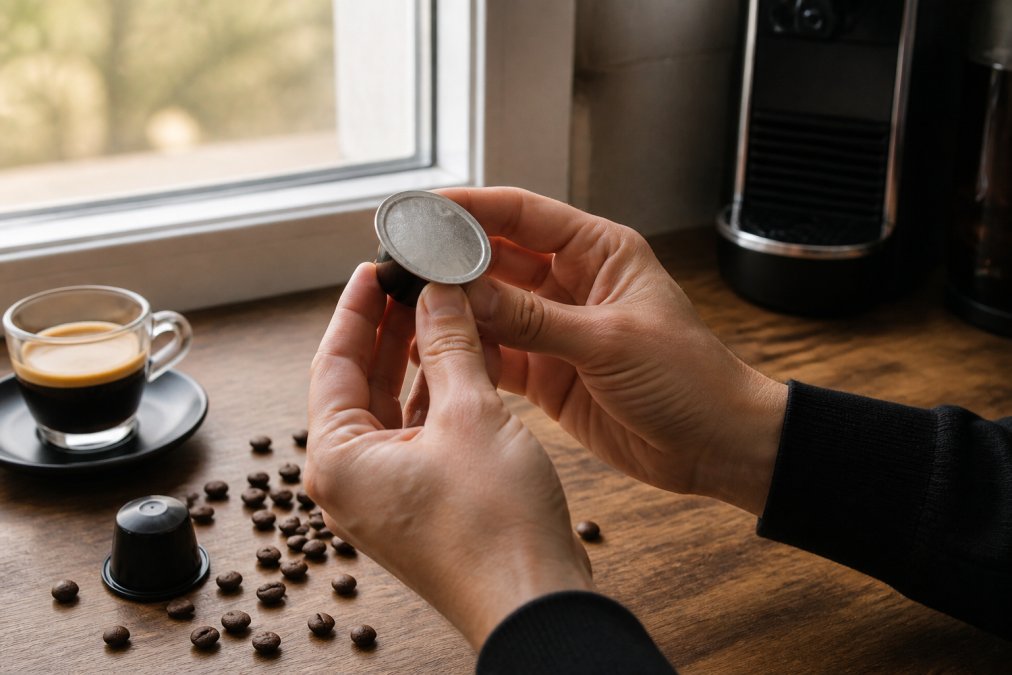
Step 1: Visual Inspection of the Pod
Look first, and look at four things:
- The foil membrane. A fresh pod's lid is flat or very slightly concave. A domed lid means CO2 from the roast has escaped the grounds and built pressure inside the capsule, which is normal in the first weeks after roasting but a red flag on a pod that has been sitting for months.
- The rim seal. Run a fingernail along the edge. Any lifting, bubbling, or pinholes mean the hermetic seal has failed and oxygen has been exchanging freely.
- The grounds through a torn lid. Fresh grounds are loose and dry. Clumped, damp, or darkened grounds point to moisture intrusion.
- The capsule body. Dents, hairline cracks, or soft spots in plastic pods compromise the barrier even if the lid looks fine.
Step 2: The Smell Test (Do This Before Brewing)
Peel the lid back and smell immediately, before the grounds hit air for more than a few seconds. Fresh grounds release a sharp, sweet, roasty note with a faint acidity. Stale grounds smell flat, papery, or like cardboard, and the change is driven by oxidation of the coffee's oils and the loss of volatile aromatic compounds.
Step 3: The Taste and Extraction Test
Brew the pod and watch three things:
- Crema. Fresh espresso-style pods produce a thicker, more persistent crema with a hazelnut-to-dark-brown color. Stale pods pull a thin, pale, fast-collapsing crema.
- Bloom and flow. A fresh pod blooms and flows evenly. A stale pod often runs faster and thinner because the grounds have lost oils and pack differently under pressure.
- Flavor. Fresh coffee tastes balanced, with sweetness and acidity in proportion. Stale coffee tastes dull and bitter with a hollow, drying finish, and the acidity drops off first. If the shot pulls thin and watery, the oils are gone.
A Quick Reference for What Each Sense Catches
| Sense | Fresh Signal | Stale Signal |
|---|---|---|
| Sight (pod) | Flat lid, tight rim, loose dry grounds | Domed lid, lifted rim, clumped grounds |
| Smell | Sweet, roasty, bright | Flat, papery, cardboard |
| Taste | Balanced, sweet, lingering finish | Dull, bitter, hollow, drying |
| Extraction | Thick crema, even flow | Thin crema, fast watery flow |
If two or more rows land in the stale column, the pod is past its peak. It is still safe to drink, but it will not taste like what the roaster intended.
How to Store Coffee Pods for Maximum Freshness
To store coffee pods for maximum freshness, keep them sealed, cool, dark, and dry. Oxygen, heat, light, and moisture are the four enemies, and every storage decision should block at least one of them.
- Keep pods in their original sealed packaging until use
- Store away from the stove, oven, and direct sunlight
- Skip the fridge and freezer, where condensation ruins the seal
- Keep the box closed to limit air exposure
- Use older pods first so nothing sits at the back of the shelf
Does Pod Material Change How Long Freshness Lasts?
Pod material changes shelf stability more than most people realize, and the reason is oxygen transmission rate. Coffee stales primarily through oxidation of its oils and the escape of volatile aromatic compounds, so the barrier between the grounds and the air around them determines how fast that happens. Aluminum, plastic, and compostable capsules each block oxygen differently, and that difference drives how long the grounds stay good.
How Each Material Performs
- Aluminum. Aluminum foil laminates offer the strongest oxygen barrier available in single-serve packaging and hold a hermetic seal best. A well-sealed aluminum capsule can keep grounds near peak for a year or more past the roast date, and many roasters print best-by dates in that range. The trade-off is recyclability logistics and cost.
- Plastic. Plastic capsules sit in the middle. They are decent barriers at first, but plastic is more permeable to oxygen over time, and the seal quality varies widely by manufacturer. Expect a shorter usable window than aluminum, often several months rather than a year-plus.
- Compostable and paper-based. These trade barrier strength for sustainability. Plant-fiber and paper laminates are the most permeable of the three, so they usually carry the shortest best-by windows and need tighter storage. If you buy compostable pods, buy them in smaller quantities and drink them sooner.
| Pod Material | Oxygen Barrier | Typical Shelf Life | Best For |
|---|---|---|---|
| Aluminum | Strongest | Longest (often 12+ months) | Long-term storage, buying in bulk |
| Plastic | Moderate | Medium (several months) | Everyday use |
| Compostable | Weakest | Shortest | Quick consumption, small boxes |
The Roast Level Factor Nobody Mentions
Material is only half the equation. Roast level changes how fast the grounds inside degrade, and this is the variable most freshness guides skip entirely.
What This Means for Your Shelf
Match the material to how fast you actually drink through a box. If you go through a sleeve in two weeks, compostable pods are fine and you get the sustainability benefit. If you stock up during a sale and let boxes sit for months, aluminum is the safer bet. And if you keep multiple roasts on hand, check each box's date before you assume it is still at peak, because the roast level inside changes the clock even when the packaging is identical.
Why Old Pods Mess With Your Machine (and How to Fix It)
Old pods can throw off your machine's performance, not just your coffee's taste. Stale grounds lose their oils and pack differently, which changes how water moves through the capsule during brewing.
Conclusion: Fresh Pods, Better Coffee
Freshness is not a mystery once you know what to check. Date, seal, smell, and taste tell you almost everything, and smart storage keeps the rest in line. Skip the fridge, respect the best-by date, and match your pod material to how fast you actually drink through a box.
Frequently Asked Questions
What's the shelf life for coffee pods?
Most sealed coffee pods stay at peak quality for 6 to 12 months from the roast date, though many carry a best-by date up to 18 months out. Aluminum and vacuum-sealed capsules hold freshness longest because they block oxygen. Plastic pods and compostable capsules let in more air over time, so their flavor fades faster. Once you open a pod or break the seal, use it within a day or two for the best cup.
Do coffee pods actually go bad after the best-by date?
They don't become unsafe to drink in most cases, but the flavor drops off. The best-by date marks peak quality, not a safety cutoff. After that date, oxidation and moisture exposure break down the oils that carry aroma, so you get flat, bitter, or cardboard-like notes. If the pod is still sealed, stored cool and dry, and smells like coffee when you open it, it's usually fine to brew, just not at its best.
What are the physical signs of a stale coffee pod?
Start with a visual inspection: a puffy, domed, or loose foil lid often means oxygen got in. Check for dampness or clumping grounds inside the capsule. Then do an olfactory test, since smell is the fastest sensory cue. Fresh grounds smell sweet and roasty; stale ones smell flat, papery, or like old cardboard. If the pod passes both checks, brew a small cup and taste for dull acidity and a thin body before using the rest of the box.
How does improper storage affect coffee pod freshness?
Heat, humidity, and light are the three biggest threats. Storing pods above the coffee maker, near the stove, or in a sunny window speeds up oxidation and flavor degradation. Humidity softens the grounds and can weaken the capsule material over time. Keep pods in their original sealed packaging or an airtight container, in a cool, dark cabinet away from the oven. A pantry shelf at room temperature works better than the fridge, where moisture and odors creep in.
Have a question about pod freshness or storage? The FDA guidance on food storage and safety is a solid reference for shelf-stable products, and our team is always happy to help you pick the right roast.